
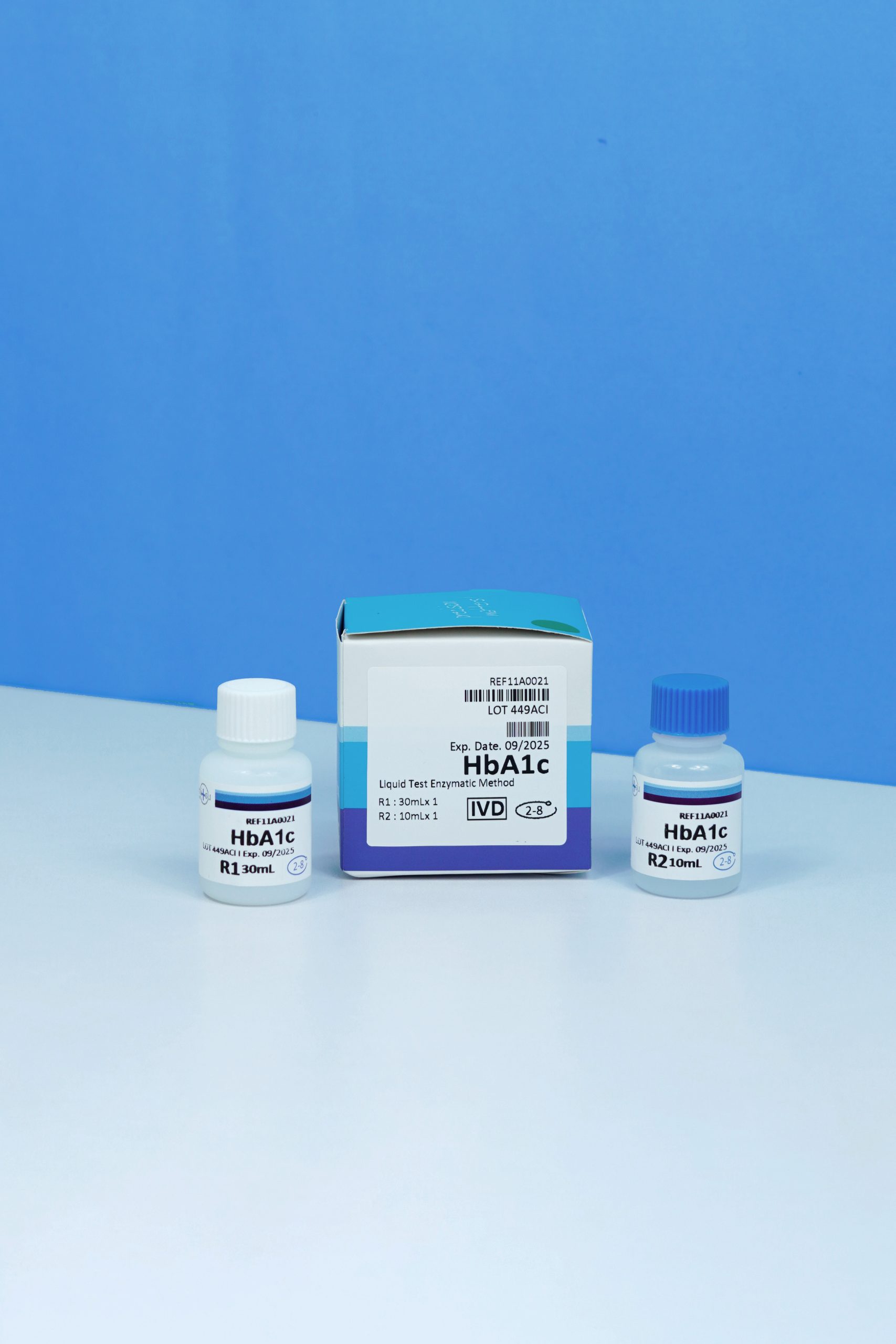
Hemoglobin Alc (HbAlc) is a glycated hemoglobin is formed by the reaction between the non-enzyme glucose and hemoglobin. This process is ongoing in the life cycle of red blood cells (average life time of 100-120 days). The rate of glycation is directly proportional to the concentration of glucose in the blood. HbA1c values in the blood represents the average glucose value within 6 to 8 weeks (the value is determined by the cycle time of the red blood cell turnover in the predicted number of weeks) .HbA1c is suitable for long-term retrospective observation of blood glucose concentrations in diabetics mellitus. Clinical studies indicate that lower HbA1c values can prevent or delay the impact of complications in diabetes. HbA1c values depending on the amount of hemoglobin HbA1c value may indicate that the concentration of total hemoglobin.
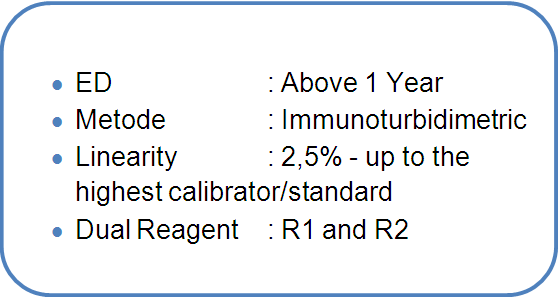
The first false low values (lower HbA1c values but values high blood sugar) can occur in patients with red blood cell survival time is short (hemolytic disorders) or blood loss in considerable amounts previously (young red blood cell count more). The second false high values (high HbA1c value but the value of the normal blood sugar) can occur in iron deficiency anemia (red blood cell count more old). The above conditions need to be considered in the interpretation of HbA1c results.
So that a more accurate examination with HbA1c for detecting diabetes mellitus.
Figure 1.0 The comparison method Immunoturbidimetric HbA1c HPLC method
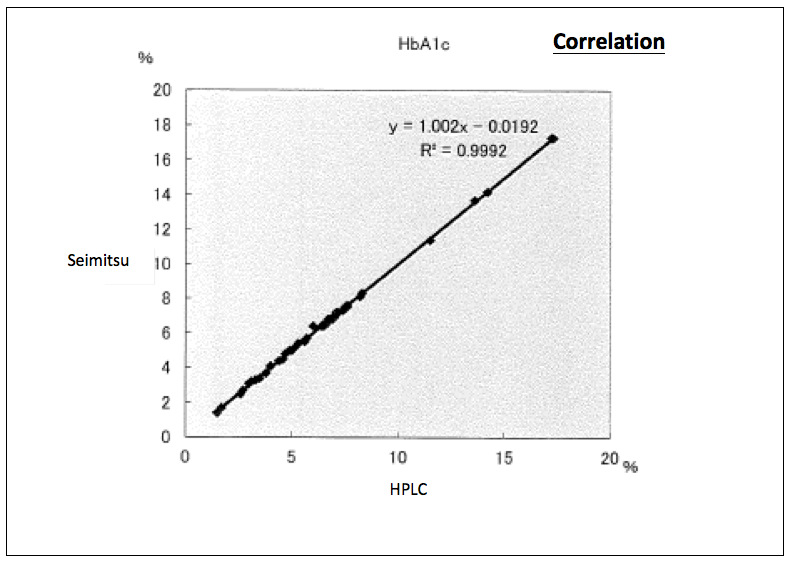
The image above reflects the comparison between the method Immunoturbidimetric (using antibody) and HPLC (retention time) in the HbA1c examination. Based image comparison chart above it can be concluded that the correlation between the two methods are similar in 99.92% yield. So checking using HbA1c Immunoturbidimetric Seimitsu no doubt the result.
* Figure 1.0 is taken from the data evaluation Diagnostics Seimitsu plant located in Japan
